See for yourself in the link below!
Read it here
Showing posts with label Thanksgiving. Show all posts
Showing posts with label Thanksgiving. Show all posts
Friday, November 20, 2015


Tuesday, October 9, 2012
Would you eat a stack of 16 sugar cubes?
This website breaks down the sugar content in common things you eat and drink.
http://www.sugarstacks.com/
http://www.sugarstacks.com/
Thursday, September 27, 2012
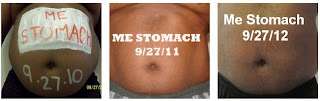
2 year anniversary!
Today makes 2 years since I started this blog. I've had my ups and downs, but I'm still focused. My BMI is now 34.6. Continue to follow my progress.

Wednesday, September 19, 2012
More Than Half In 39 States Will Be Obese
We Americans already know how fat we are. Can it get much worse?
Apparently, yes, according to an advocacy group that predicts that by 2030 more than half the people in the vast majority of states will be obese.
Mississippi is expected to retain its crown as the fattest state in the nation for at least two more decades. The report predicts 67 percent of that state's adults will be obese by 2030; that would be an astounding increase from Mississippi's current 35 percent obesity rate.
The new projections were released Tuesday by Trust for America's Health with funding from the Robert Wood Johnson Foundation. Trust for America's Health regularly reports on obesity to raise awareness, mostly relying on government figures.
The group's dismal forecast goes beyond the 42 percent national obesity level that federal health officials project by 2030. The group predicts every state would have rates above 44 percent by that time, although it didn't calculate an overall national average.
About two-thirds of Americans are overweight now. That includes those who are obese, a group that accounts for about 36 percent. Obesity rates have been holding steady in recent years. Obesity is defined as having a body-mass index of 30 or more, a measure of weight for height.
Trust for America's Health officials said their projections are based in part on state-by-state surveys by the Centers for Disease Control and Prevention from 1999 through 2010. The phone surveys ask residents to self-report their height and weight; people aren't always so accurate about that.
The researchers then looked at other national data tracking residents' weight and measurements and made adjustments for how much people in each state might fudge the truth about their weight. They also tried to apply recent trends in obesity rates, along with other factors, to make the predictions.
Officials with Trust for America's Health said they believe their projections are reasonable.
And New York City's health commissioner agreed. "If we don't do anything, I think that's a fair prediction," said Dr. Thomas Farley whose city banned just supersize sugary drinks to curb obesity.
Trust for America projects that by 2030, 13 states would have adult obesity rates above 60 percent, 39 states might have rates above 50 percent, and every state would have rates above 44 percent.
Even in the thinnest state — Colorado, where about one-fifth of residents are obese — 45 percent would be obese by 2030.
Perhaps more surprising, Delaware is expected to have obesity levels nearly as high as Mississippi. Delaware currently is in the middle of the pack when it comes to self-reported obesity rates.
The report didn't detail why some states' rates were expected to jump more than others. It also didn't calculate an average adult obesity rate for the entire nation in 2030, as the CDC did a few months ago. But a researcher who worked on the Trust for America's Health study acknowledged that report's numbers point toward a figure close to 50 percent.
CDC officials declined to comment on the new report.
Whichever estimates you trust most, it's clear that the nation's weight problem is going to continue, escalating the number of cases of diabetes, heart disease and stroke, said Jeff Levi, executive director of Trust for America's Health.
By 2030, medical costs from treating obesity-related diseases are likely to increase by $48 billion, to $66 billion per year, his report said.
The focus of so much of the ongoing debate about health care is over controlling costs, Levi said. "... We can only achieve it by addressing obesity. Otherwise, we're just tinkering around the margins."
___
Listed are 2011 obesity levels followed by the Trust for America's Health projections for 2030. States are listed in order from the highest to lowest projections in 2030:
Mississippi, 35 percent, 67 percent
Oklahoma, 31 percent, 66 percent
Delaware, 29 percent, 65 percent
Tennessee, 29 percent, 63 percent
South Carolina, 31 percent, 63 percent
Alabama, 32 percent, 63 percent
Kansas, 30 percent, 62 percent
Louisiana, 33 percent, 62 percent
Missouri, 30 percent, 62 percent
Arkansas, 31 percent, 61 percent
South Dakota, 28 percent, 60 percent
West Virginia, 32 percent, 60 percent
Kentucky, 30 percent, 60 percent
Ohio, 30 percent, 60 percent
Michigan, 31 percent, 59 percent
Arizona, 25 percent, 59 percent
Maryland, 28 percent, 59 percent
Florida, 27 percent, 59 percent
North Carolina, 29 percent, 58 percent
New Hampshire, 26 percent, 58 percent
Texas, 30 percent, 57 percent
North Dakota, 28 percent, 57 percent
Nebraska, 28 percent, 57 percent
Pennsylvania, 29 percent, 57 percent
Wyoming, 25 percent, 57 percent
Wisconsin, 28 percent, 56 percent
Indiana, 31 percent, 56 percent
Washington, 27 percent, 56 percent
Maine, 28 percent, 55 percent
Minnesota, 26 percent, 55 percent
Iowa, 29 percent, 54 percent
New Mexico, 26 percent, 54 percent
Rhode Island, 25 percent, 54 percent
Illinois, 27 percent, 54 percent
Georgia, 28 percent, 54 percent
Montana, 25 percent, 54 percent
Idaho, 27 percent, 53 percent
Hawaii, 22 percent, 52 percent
New York, 25 percent, 51 percent
Virginia, 29 percent, 50 percent
Nevada, 25 percent, 50 percent
Oregon, 27 percent, 49 percent
Massachusetts, 23 percent, 49 percent
New Jersey, 24 percent, 49 percent
Vermont, 25 percent, 48 percent
California, 24 percent, 47 percent
Connecticut, 25 percent, 47 percent
Utah, 24 percent, 46 percent
Alaska, 27 percent, 46 percent
Colorado, 21 percent, 45 percent
District of Columbia, 24 percent, 33 percent
Apparently, yes, according to an advocacy group that predicts that by 2030 more than half the people in the vast majority of states will be obese.
Mississippi is expected to retain its crown as the fattest state in the nation for at least two more decades. The report predicts 67 percent of that state's adults will be obese by 2030; that would be an astounding increase from Mississippi's current 35 percent obesity rate.
The new projections were released Tuesday by Trust for America's Health with funding from the Robert Wood Johnson Foundation. Trust for America's Health regularly reports on obesity to raise awareness, mostly relying on government figures.
The group's dismal forecast goes beyond the 42 percent national obesity level that federal health officials project by 2030. The group predicts every state would have rates above 44 percent by that time, although it didn't calculate an overall national average.
About two-thirds of Americans are overweight now. That includes those who are obese, a group that accounts for about 36 percent. Obesity rates have been holding steady in recent years. Obesity is defined as having a body-mass index of 30 or more, a measure of weight for height.
Trust for America's Health officials said their projections are based in part on state-by-state surveys by the Centers for Disease Control and Prevention from 1999 through 2010. The phone surveys ask residents to self-report their height and weight; people aren't always so accurate about that.
The researchers then looked at other national data tracking residents' weight and measurements and made adjustments for how much people in each state might fudge the truth about their weight. They also tried to apply recent trends in obesity rates, along with other factors, to make the predictions.
Officials with Trust for America's Health said they believe their projections are reasonable.
And New York City's health commissioner agreed. "If we don't do anything, I think that's a fair prediction," said Dr. Thomas Farley whose city banned just supersize sugary drinks to curb obesity.
Trust for America projects that by 2030, 13 states would have adult obesity rates above 60 percent, 39 states might have rates above 50 percent, and every state would have rates above 44 percent.
Even in the thinnest state — Colorado, where about one-fifth of residents are obese — 45 percent would be obese by 2030.
Perhaps more surprising, Delaware is expected to have obesity levels nearly as high as Mississippi. Delaware currently is in the middle of the pack when it comes to self-reported obesity rates.
The report didn't detail why some states' rates were expected to jump more than others. It also didn't calculate an average adult obesity rate for the entire nation in 2030, as the CDC did a few months ago. But a researcher who worked on the Trust for America's Health study acknowledged that report's numbers point toward a figure close to 50 percent.
CDC officials declined to comment on the new report.
Whichever estimates you trust most, it's clear that the nation's weight problem is going to continue, escalating the number of cases of diabetes, heart disease and stroke, said Jeff Levi, executive director of Trust for America's Health.
By 2030, medical costs from treating obesity-related diseases are likely to increase by $48 billion, to $66 billion per year, his report said.
The focus of so much of the ongoing debate about health care is over controlling costs, Levi said. "... We can only achieve it by addressing obesity. Otherwise, we're just tinkering around the margins."
___
Listed are 2011 obesity levels followed by the Trust for America's Health projections for 2030. States are listed in order from the highest to lowest projections in 2030:
Mississippi, 35 percent, 67 percent
Oklahoma, 31 percent, 66 percent
Delaware, 29 percent, 65 percent
Tennessee, 29 percent, 63 percent
South Carolina, 31 percent, 63 percent
Alabama, 32 percent, 63 percent
Kansas, 30 percent, 62 percent
Louisiana, 33 percent, 62 percent
Missouri, 30 percent, 62 percent
Arkansas, 31 percent, 61 percent
South Dakota, 28 percent, 60 percent
West Virginia, 32 percent, 60 percent
Kentucky, 30 percent, 60 percent
Ohio, 30 percent, 60 percent
Michigan, 31 percent, 59 percent
Arizona, 25 percent, 59 percent
Maryland, 28 percent, 59 percent
Florida, 27 percent, 59 percent
North Carolina, 29 percent, 58 percent
New Hampshire, 26 percent, 58 percent
Texas, 30 percent, 57 percent
North Dakota, 28 percent, 57 percent
Nebraska, 28 percent, 57 percent
Pennsylvania, 29 percent, 57 percent
Wyoming, 25 percent, 57 percent
Wisconsin, 28 percent, 56 percent
Indiana, 31 percent, 56 percent
Washington, 27 percent, 56 percent
Maine, 28 percent, 55 percent
Minnesota, 26 percent, 55 percent
Iowa, 29 percent, 54 percent
New Mexico, 26 percent, 54 percent
Rhode Island, 25 percent, 54 percent
Illinois, 27 percent, 54 percent
Georgia, 28 percent, 54 percent
Montana, 25 percent, 54 percent
Idaho, 27 percent, 53 percent
Hawaii, 22 percent, 52 percent
New York, 25 percent, 51 percent
Virginia, 29 percent, 50 percent
Nevada, 25 percent, 50 percent
Oregon, 27 percent, 49 percent
Massachusetts, 23 percent, 49 percent
New Jersey, 24 percent, 49 percent
Vermont, 25 percent, 48 percent
California, 24 percent, 47 percent
Connecticut, 25 percent, 47 percent
Utah, 24 percent, 46 percent
Alaska, 27 percent, 46 percent
Colorado, 21 percent, 45 percent
District of Columbia, 24 percent, 33 percent
Tuesday, November 29, 2011
November wasn't a good month!
Between getting new medication on the 1st that had a great side effect( Weight Gain) to holiday eating it hasn't been a great month for me. Of course I'm not going to give up, I going to go hard on one of the worse months to ever diet! Office snacks, holidays parties and family get-together don't help at all. I'm at my best with challenges like these. Getting back on track.
Friday, November 18, 2011
Saturday, November 12, 2011
Enjoy All the Trimmings--and Still Stay Trim
SparkPeople's 500-Calorie Thanksgiving Feast
Thanksgiving is a time for family, gratitude, and, of course, food. The typical holiday meal can have more than 4,500 calories and 229 grams of fat, according to the Caloric Control Council. That's almost three days worth of food for most of us! Butter, cream and white bread seem to be lurking in almost every dish, and the meal never seems to end.
For those of us who are trying lead healthier lifestyles, moderation and healthy eating are just as important on Thanksgiving. Fortunately, it is possible to eat right and still enjoy yourself on Turkey Day!
To help, I created brand new SparkRecipes for a three-course Thanksgiving meal that clock in around 500 calories! (Dessert, not included in that number, will add 150 calories or fewer, if you have room for it.)
Use the chart below to compare my Thanksgiving feast with a traditional meal. The more recipes you use from this list, the more calories you'll save--without sacrificing taste or tradition!
This SparkPeople meal has 510 fewer calories and 39 fewer grams of fat than a traditional feast! You'll find all the recipes to make it below! These recipes include a veggie-rich soup to start your meal off right, the juiciest turkey you'll ever taste, several sides, two desserts, plus a cranberry relish that will leave the store-bought jelly quivering in its can.
Thanksgiving is a time for family, gratitude, and, of course, food. The typical holiday meal can have more than 4,500 calories and 229 grams of fat, according to the Caloric Control Council. That's almost three days worth of food for most of us! Butter, cream and white bread seem to be lurking in almost every dish, and the meal never seems to end.
For those of us who are trying lead healthier lifestyles, moderation and healthy eating are just as important on Thanksgiving. Fortunately, it is possible to eat right and still enjoy yourself on Turkey Day!
To help, I created brand new SparkRecipes for a three-course Thanksgiving meal that clock in around 500 calories! (Dessert, not included in that number, will add 150 calories or fewer, if you have room for it.)
Use the chart below to compare my Thanksgiving feast with a traditional meal. The more recipes you use from this list, the more calories you'll save--without sacrificing taste or tradition!
| SparkRecipes Feast | Calories | Fat | Traditional Meal | Calories | Fat |
| Herb Roasted Turkey, 3 oz light meat | 140 | 3 g | Turkey, 3 oz light meat | 140 | 3 g |
| Apple Cider Gravy, 2 T | 20 | 0 g | Gravy, 2 T | 50 | 2 g |
| Vegetable and Fruit Stuffing, 1/2 c | 78 | 1 g | Stuffing, 1/2 c | 180 | 9 g |
| Roasted Root Vegetables, 1/2 c | 82 | 2 g | Mashed potatoes, 1/2 c | 220 | 8 g |
| Cranberry Relish, 2 T | 42 | 0 g | Cranberry jelly, 2 T | 55 | 0 g |
| Steamed green beans (or another green vegetable), 1/2 c | 15 | 0 g | Green bean casserole, 1/2 c | 120 | 8 g |
| Roasted Squash Soup, 1 c | 128 | 3 g | Cream-based soup, 1 c | 250 | 18 g |
| Total: | 505 | 9 g | Total: | 1,015 | 48 g |
This SparkPeople meal has 510 fewer calories and 39 fewer grams of fat than a traditional feast! You'll find all the recipes to make it below! These recipes include a veggie-rich soup to start your meal off right, the juiciest turkey you'll ever taste, several sides, two desserts, plus a cranberry relish that will leave the store-bought jelly quivering in its can.
Subscribe to:
Posts (Atom)